- Flight from Amsterdam
- Split just over 2 hours
- Time difference
- None
- Currency
- Euro
- Language
- Croatian
- Entry for Dutch citizens
- Passport or ID card
Overview
Croatia is easy to reach: no time difference, the euro and green travel advice. Behind the familiar coast lies Velebit, the country's largest mountain range, with the canyons of Paklenica and the stone-built Premužić Trail. Plitvice lies a few hours inland.
Off the coast lie islands where farmland, old towns and small harbours meet. Travel in May, June or September and you have the warmth without the heat of high summer. A trip can combine mountains and islands, or stay quietly in Istria.
- Little paperwork No time difference, the euro and no visa for Dutch citizens, so an organiser can concentrate on the programme.
- Mountains just behind the coast Paklenica and Velebit lie close to the Adriatic coast, so a walking day and a day by the sea fit together.
- Islands as a route Ferries from Split reach several islands, so you can plan a trip across the water in short steps.
Regions

Velebit and Plitvice
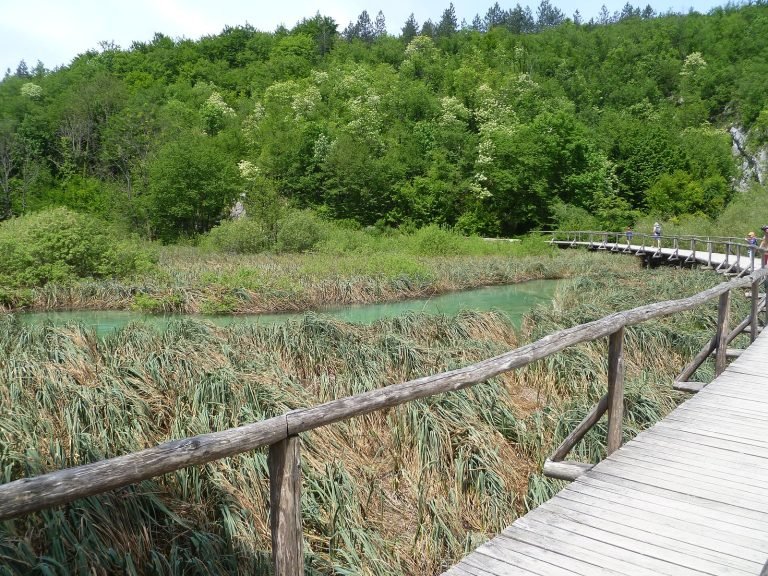
Paklenica, on the southern slopes of Velebit, has two canyons and 150 to 200 kilometres of paths. Higher up runs the Premužić Trail, built in dry stone between 1930 and 1933 and well suited to less experienced walkers. The Plitvice Lakes have been on the World Heritage List since 1979. Swimming is not allowed. In the mountains, stay on marked paths and expect the weather to change quickly.

Dalmatian islands
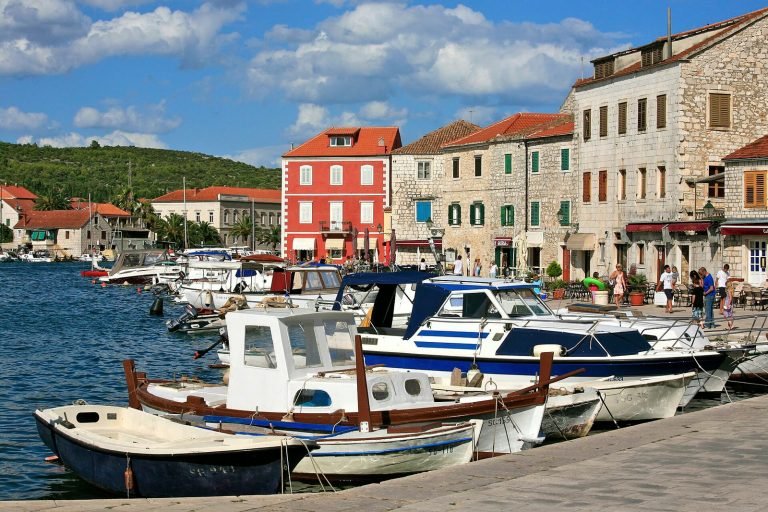
On Hvar lies the Stari Grad Plain, laid out by Greek colonists in the 4th century BC and still in use. It has been a World Heritage site since 2008. Vis was a Yugoslav naval base after the war. From Split you reach the islands by car ferry or catamaran. Timetables change with the season, so we check them for each trip.

Dubrovnik and the south
The old city of Dubrovnik has been on the World Heritage List since 1979. Since the Pelješac Bridge opened you can reach the area without the border crossing at Neum. Off the coast lies Mljet, called Croatia's greenest island, with a national park in the west. July and August are the warmest months here, and most of the rain falls in late autumn.

Istria
Rovinj is an officially bilingual Croatian and Italian fishing port on the west coast. Poreč has a historic complex on the World Heritage List. Inland stands the hill village of Motovun. Below it, from 1902 to 1935, ran the Parenzana, a narrow-gauge railway that is now a walking and cycling path, with about 80 kilometres in Istria. Its high point is at Grožnjan. Rovinj itself is not on that route.


What a day can look like
An illustrative example. We shape your own day with you.

From Roman Split to independence
- 295 to 305 Emperor Diocletian builds his palace at what later becomes Split.
- 10th century Croatia is a kingdom under Tomislav.
- 1102 Croatia enters a union with Hungary and keeps its own institutions.
- 1420 to 1797 Venice governs much of Dalmatia. Dubrovnik remains a republic of its own.
- 1918 Croatia becomes part of the state later called Yugoslavia.
- 1991 Croatia declares independence, and joins the EU in 2013.
At the table in Croatia

Peka
Lamb, beef or octopus, cooked under a clay or wrought-iron bell over an open fire.

Pašticada
A Dalmatian beef stew with dried fruit, mainly prunes, usually served with gnocchi.

Crni rižot
Risotto turned black by cuttlefish ink, with prošek added for aroma.

Paški sir and truffles
Sheep's cheese from the island of Pag and white truffles from Istria, two well-known regional products.
Much of the accommodation consists of rooms and apartments owned by local families, often close to the harbour or the beach. Inland Istria has agritourisms, farms that cook with what they produce themselves, and elsewhere there are stone holiday houses.
When to go
May, June and September are the best months, and October too for the mountains and Istria. October on the coast is still warm, but wetter. July and August are the hottest, with the highest wildfire risk, and from 1 June to 31 October open fires and barbecues are banned outside designated areas. Inland, nights drop below freezing from November to March.
| Region | January | February | March | April | May | June | July | August | September | October | November | December |
|---|---|---|---|---|---|---|---|---|---|---|---|---|
| Velebit and Plitvice | less suitable | less suitable | less suitable | possible | good period | good period | possible | possible | good period | good period | less suitable | less suitable |
| Dalmatian islands | less suitable | less suitable | less suitable | possible | good period | good period | possible | possible | good period | possible | less suitable | less suitable |
| Dubrovnik and the south | less suitable | less suitable | less suitable | possible | good period | good period | possible | possible | good period | possible | less suitable | less suitable |
| Istria | less suitable | less suitable | less suitable | possible | good period | good period | possible | possible | good period | good period | less suitable | less suitable |
good period possible less suitable
Start planning it yourself
Slide through the year
Split
- Daytime
- 23 °C
- Night
- 15 °C
- Rain
- 55 mm
- Sea
- 19 °C
Dubrovnik
- Daytime
- 21 °C
- Night
- 15 °C
- Rain
- 76 mm
- Sea
- 19 °C
Long-term averages, not a forecast. Periods and the way rain days are counted differ between weather services. Sea temperature: rounded average for 2023 to 2025, for open water off the coast. Bays can be warmer or colder.
Flying from Amsterdam
- Split± 2.25 hours
Croatia has the same time as the Netherlands.
Flight times are approximate and apply to a direct flight. Timetables change by season.
How far is it really?
From Zagreb via Plitvice along the coast to Dubrovnik. About 10 hours of driving in all.
Zagreb
- Plitvice2.5 hrs
- Zadar2 hrs
- Split2 hrs
- Dubrovnik3.5 hrs
Drive times are approximate, without stops or traffic. A coach takes longer.
World Heritage on the map
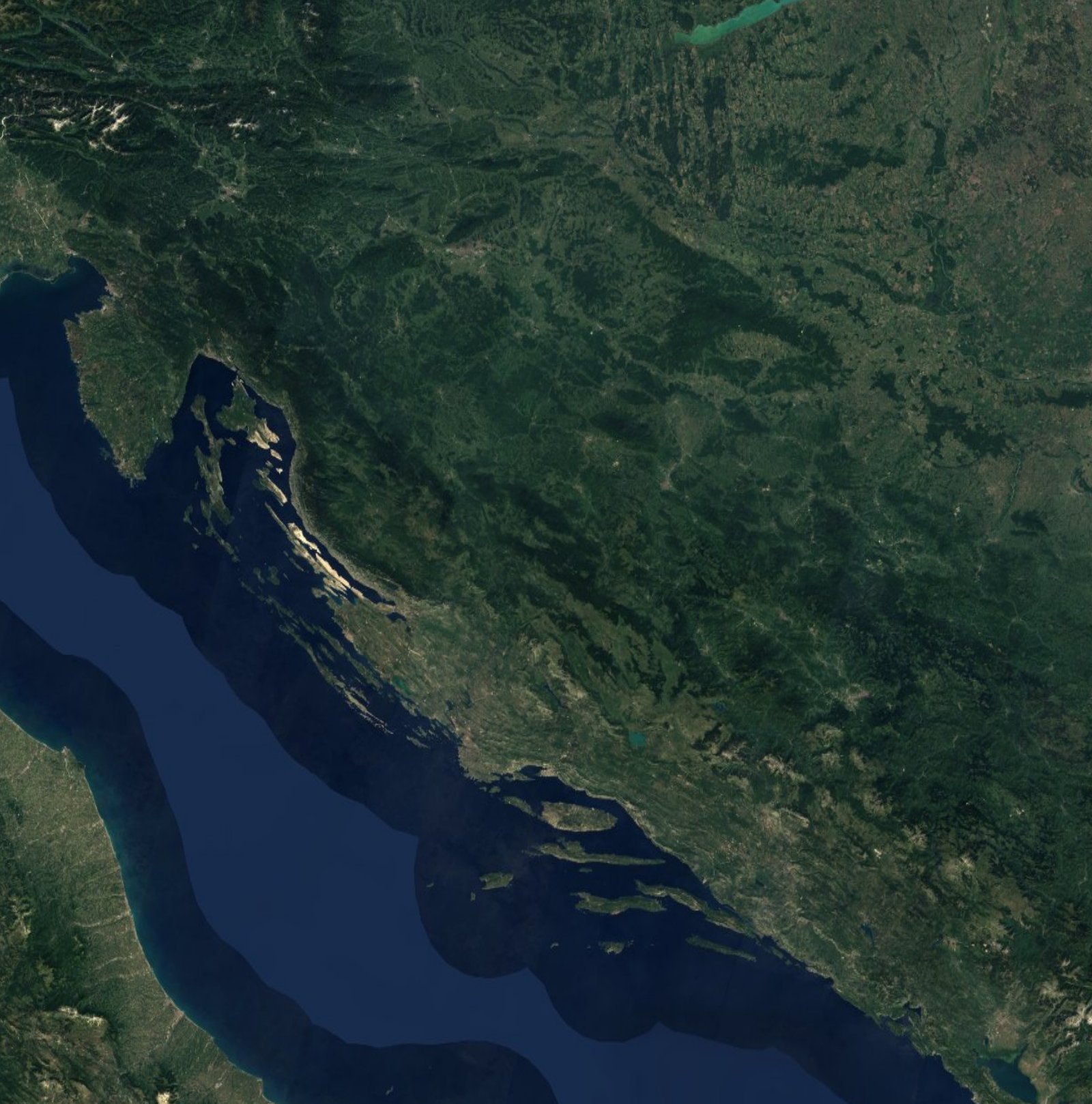
Plitvice Lakes National Park 1979
Show as a list
- Plitvice Lakes National Park 1979
- Historical Complex of Split with the Palace of Diocletian 1979
- Old City of Dubrovnik 1979
- Episcopal Complex of the Euphrasian Basilica in Poreč 1997
- Historic City of Trogir 1997
- Cathedral of St James in Šibenik 2000
- Stari Grad Plain (Hvar) 2008
- Venetian Works of Defence (point: Zadar) 2017
Say it yourself
The pronunciation is a guide, not an exact rendering.
Good to know
- Money
- Euro (EUR)
- Plug
- C/F, 230 V. Dutch plugs fit, so you do not need an adapter.
- Entry
- Valid passport or ID card for the whole stay. No visa. Current travel advice
Rules for Dutch citizens with a Dutch passport. Always check the current travel advice just before you leave.
Practical
Checked on 5 November 2026. Before you leave, always check NederlandWereldwijd.nl for current travel advice and entry rules.
- Travel advice Dutch travel advice is green. It mentions pickpockets, summer wildfires and fast-changing mountain weather. In the countryside, stay on marked paths. Check NederlandWereldwijd before you book.
- Entry Dutch citizens travel on a passport or ID card valid for the whole trip, without a visa. EES and ETIAS add no step for EU citizens. Group members on a non-EU passport need to check this separately. Check NederlandWereldwijd before you book.
- Time difference None. Croatia keeps the same time as the Netherlands.
- Money You pay in euros, used since 1 January 2023. Tipping is not compulsory.
- Language and plugs The language is Croatian, with Italian also official in Rovinj. Plugs are types C and F, 230 volts, so Dutch appliances fit.
- Health Protect yourself against ticks if you spend a lot of time outdoors, and ask the GGD whether vaccination makes sense. Tap water is generally safe in cities. In rural areas quality varies.
- Emergency number 112, which also reaches mountain rescue.
Frequently asked
How do we arrange Plitvice for a group?
The park counts 15 people or more as a group. A group must announce itself by email beforehand, and group tickets can be collected only with a reservation. A guide needs a separate exam certificate inside the park, so check that. See the park's website for the current rules.
How do the ferries work?
On a number of lines, such as Split to Stari Grad and Vis, vehicles can be reserved. Jadrolinija advises reaching the port 60 minutes before departure on those lines in summer. Timetables change by season, so finalise your plan with the current times.
Can the group have a barbecue outdoors?
From 1 June to 31 October, outdoor fires and barbecues are allowed only in designated areas. Keep this in mind for any outdoor activity. In a wildfire, follow the instructions of the local authorities.
What should we watch for when walking in Velebit?
Mountain weather can change quickly, even in summer. Stay on marked paths and ask for local advice on the route. The emergency number 112 also reaches mountain rescue. Consider extra insurance for higher-risk sports.
What applies to travel companions without an EU passport?
Croatia takes part in the EU Entry/Exit System. Travellers from outside the EU have their details registered at the border there. Check their visa requirements separately. This also applies to business groups with international colleagues.
What we can offer
- On request: a walking trip in Paklenica, Velebit and at Plitvice
- On request: an island trip with small places to stay, from Split to Dubrovnik
- On request: a calm week in Istria, with culture and walking
- On request: a guide or tour leader for your own organisation's programme